
Innovative Nail Polish Aims to Enhance Touchscreen Use
A new conductive nail polish could allow those with long nails to use touchscreens more easily. This research offers a potential solution for a common tech issue.
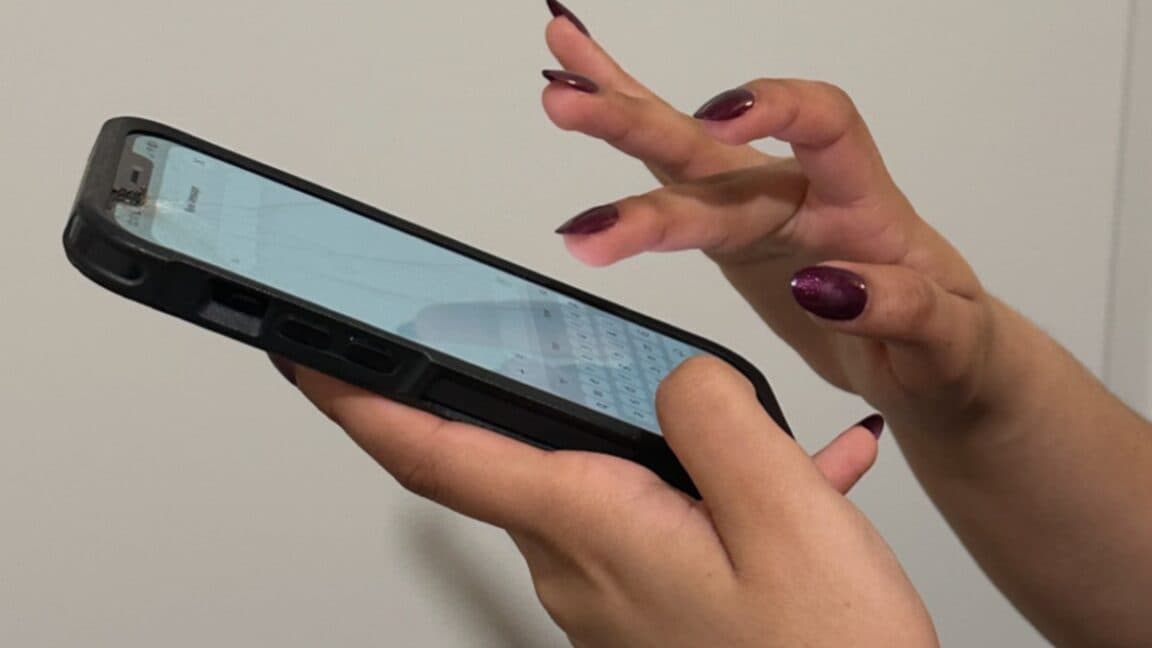
The advent of touchscreen technology has greatly benefited many users. However, individuals with long fingernails often face challenges when using capacitive screens, as their nails do not conduct touch. While options like styluses exist, many hope to use their fingernails directly. Research presented at the American Chemical Society meeting in Atlanta, Georgia, suggests that a conductive nail polish may provide a solution.
This investigation began as a special project by Manasi Desai, an undergraduate student at Centenary College of Louisiana, who has a keen interest in cosmetic chemistry. Desai aimed to explore methods of making fingernails compatible with touchscreen devices. Although some conductive nail polishes already exist, utilizing carbon nanotubes or metallic particles, these often come with health risks or limited color options. Previous innovations, such as a proposed press-on nail with a capacitive tip, have not reached commercial availability.
Desai noted that many existing polishes contain potentially harmful additives and are restricted in color, usually appearing black or metallic. Collaborating with her supervisor, organometallic chemist Joshua Lawrence, she sought to develop a clear, colorless nail polish devoid of toxic materials that could be applied over any manicure.
To create her formulation, Desai experimented with 13 different commercial clear-coat polishes, systematically adding various additives to evaluate their conductivity. After testing over 50 candidates, she found two promising materials: ethanolamine and taurine. While ethanolamine provided the necessary conductivity, it posed some toxicity risks, and taurine, a non-toxic dietary supplement, lacked clarity. Ultimately, by blending the two, Desai achieved a functional result.
Despite its potential, Desai’s conductive nail polish is not yet ready for the market. Initial tests showed that while a blob of the modified polish could register on a touchscreen when held with tweezers, a thin application did not leave sufficient conductive material to activate the screen consistently. Additionally, ethanolamine evaporates rapidly, limiting the polish's effectiveness to a few hours.
Nevertheless, this research marks a promising start, and Desai and Lawrence plan to continue exploring other compounds for improved formulations. “We’re doing the hard work of finding things that don’t work, and eventually, if you do that long enough, you find something that does,” Lawrence stated.