
NASA's Swift Observatory Faces Unique Rescue Mission
NASA's Swift Observatory is in danger of falling out of orbit. A pioneering robotic mission aims to stabilize it before it's too late.
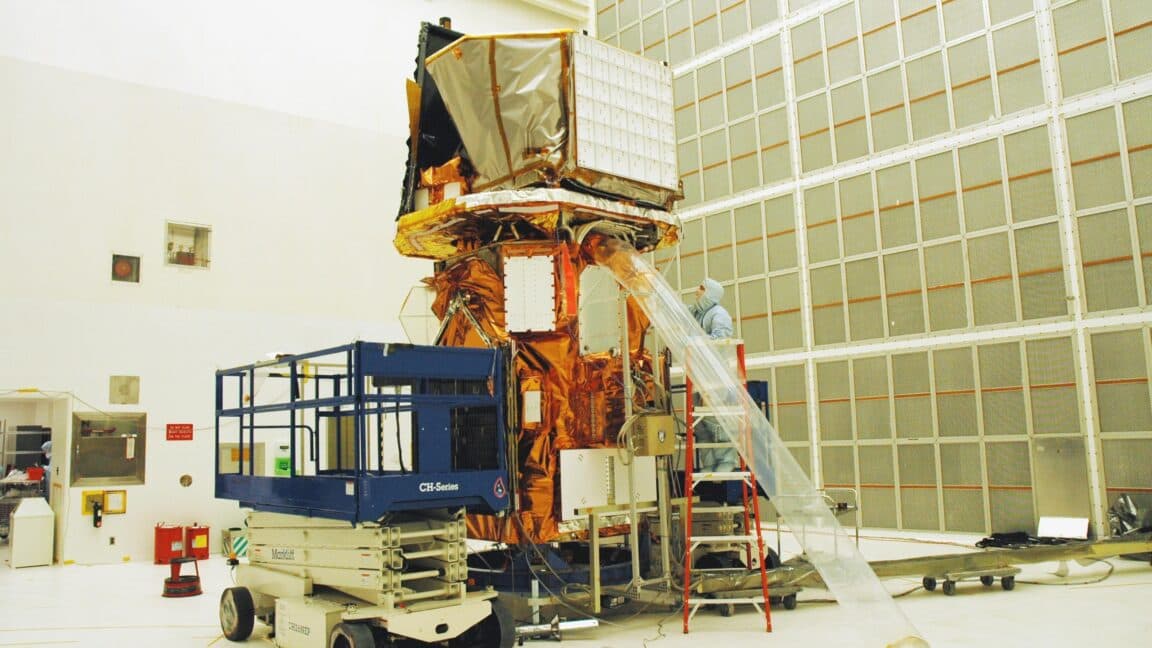
BROOMFIELD, Colorado—NASA's Neil Gehrels Swift Observatory, one of the agency's oldest astronomy missions, has been inactive for over a month as scientists prepare for a groundbreaking robotic rescue operation.
The 21-year-old satellite is losing altitude, and NASA deems its preservation worthwhile, albeit at a reasonable cost. Unlike flagship missions such as Hubble or Webb, which required extensive astronaut intervention and substantial funding, Swift's rescue may be more feasible.
Swift's construction and operational costs have reached approximately $500 million (adjusted for inflation), making it a less risky target for a commercial rescue mission. Last September, NASA contracted Katalyst Space Technologies for $30 million to design and launch a satellite that could stabilize Swift's orbit and extend its operational life.
Currently, Swift operates in low-Earth orbit, where atmospheric drag affects its trajectory. Launched in November 2004, the observatory's primary mission is to detect gamma-ray bursts, the most powerful explosions in the universe. Despite its age, Swift continues to be vital for astrophysicists, who rely on its multi-wavelength instruments for subsequent observations.
Gamma-ray bursts occur unexpectedly when massive stars collapse into black holes or during mergers of neutron stars and black holes. Their afterglow lasts from seconds to hours, necessitating swift detection and study by satellites like Swift. The observatory's ability to quickly focus on gamma-ray sources is integral to its mission, which remains unmatched by any other U.S. satellite.
However, without intervention, Swift is expected to re-enter Earth's atmosphere before the year concludes. Katalyst's robotic service vehicle, named Link, will attempt to dock with Swift and raise its altitude, providing the satellite a new opportunity for scientific contributions.
Several challenges accompany this mission: Swift was not designed for orbital capture or reboosting, Katalyst is undertaking its first docking attempt with another satellite, and NASA has given the company a demanding timeline of nine months to complete the mission.
“This is really technically ambitious,” said Ghonhee Lee, CEO of Katalyst.
The launch is scheduled for June 1, with minimal margin for error. If Swift descends below 200 miles (320 kilometers) by late summer, Katalyst may lose the ability to conduct a successful rendezvous. “It’s a lot of drag with two big spacecraft docking together,” Lee noted. “Originally, we thought we had more time.”
Navigating this ambitious project involves balancing NASA's dual objectives: demonstrating future capabilities in space exploration while preserving Swift for further scientific investigation.
When Ars visited Katalyst in late February, technicians were busy assembling components and preparing for testing, a stark contrast to the prolonged timelines typical of traditional government space missions.
“This is not quite as mature as you would expect,” an official remarked. “Keep in mind that we started this whole thing about five months ago, so we are making great progress by those standards.”
Despite skepticism, Katalyst's employees exhibit confidence in their collective efforts, working long hours to deliver a functional spacecraft under tight deadlines.
The company faced challenges in sourcing parts quickly, leading them to switch vendors or build components in-house. “We’re basically doing it where everything is coming together,” Lee explained, highlighting the simultaneous development of design, testing, and verification.
Nasa has a history of pursuing robotic satellite servicing, investing $1.5 billion in a now-defunct project that aimed to enhance in-orbit capabilities. Now, NASA is procuring services from Katalyst, mirroring previous successful approaches used in Commercial Crew and Cargo programs.
In a release regarding the Katalyst contract, Shawn Domagal-Goldman, director of NASA's astrophysics division, emphasized that the mission exemplifies a “forward-leaning, risk-tolerant approach,” proving more economical than launching a new mission to replace Swift.
Katalyst, founded in 2020, has successfully launched two small satellites and is developing a maneuverable platform called Nexus for satellite servicing. The Link platform for the Swift mission serves as a precursor to Nexus.
“Nothing under this program is inventing new technology,” Lee stated. “We’re taking existing technology and integrating it in a way that allows rapid progression at a cost-effective $30 million.”
Katalyst outperformed proposals from Starfish Space and a joint team of Cambrian Works and Astroscale to secure the contract to rescue Swift last September. At that time, projections indicated Swift would re-enter the atmosphere by late 2023 or early 2024. However, increased solar activity has accelerated atmospheric expansion, heightening drag and prompting new forecasts that Swift may decay between late July and October.
“No kidding, if we don’t launch in June, there’s real danger that this mission doesn’t come together,” Lee warned.
In prioritizing speed over complete reliability, Katalyst aims to deploy a functional spacecraft rather than delay for marginal improvements in reliability. “It’s just better to get it up there,” Lee asserted, acknowledging NASA's understanding of this approach. “That contrasts deeply with the previous idea of 'do no harm.'”