
ULA Fails to Launch Military GPS Satellite Again
The US Space Force must again turn to SpaceX for a GPS satellite launch, marking ULA's fourth failure in over a year. The decision underscores ongoing issues with ULA's Vulcan rocket.
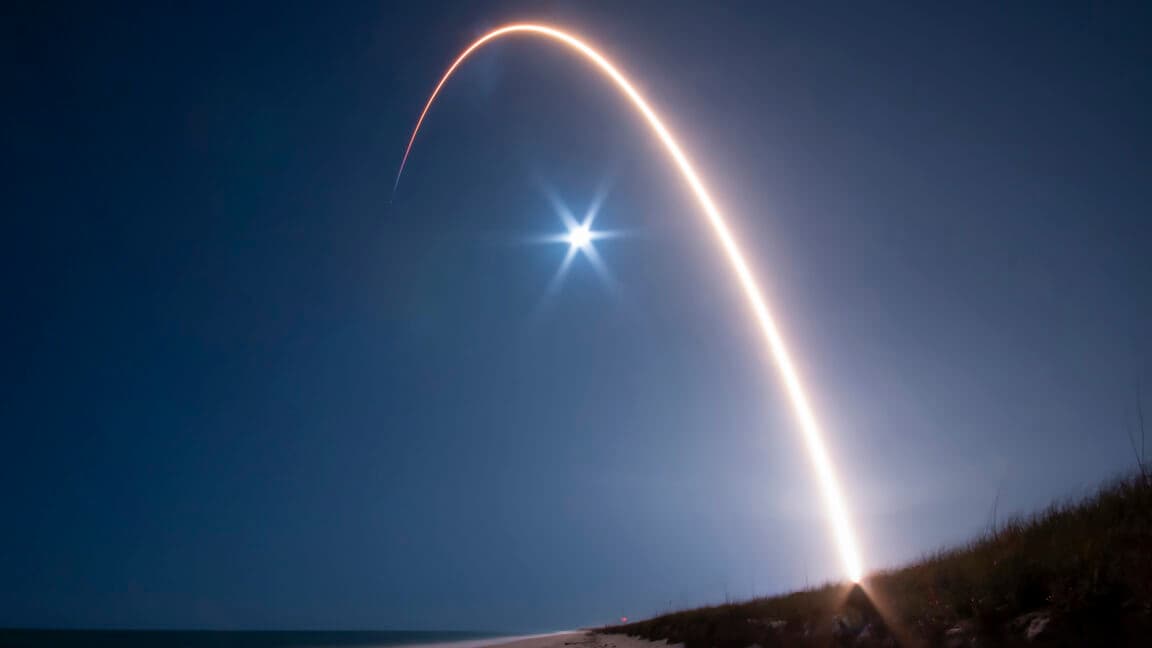
For the fourth time in just over a year, the US Space Force has found itself needing to launch a new satellite to bolster its military GPS navigation system, and once again, United Launch Alliance (ULA) has been unable to fulfill that requirement.
Initially scheduled to launch the final satellite of the Space Force's GPS Block III program this month, ULA has now seen the mission reassigned to SpaceX's Falcon 9 rocket, its main competitor in the government satellite launch sector. The announcement was made by Space Systems Command, the agency responsible for procuring spacecraft and launch vehicles for the military.
This latest transfer is part of a trend, as the Space Force previously shifted three other GPS satellite launches from ULA to SpaceX. Initially set for ULA's Vulcan rocket, these missions were reassigned beginning in 2024. In return, the military has designated three future launches for ULA, including the GPS III SV10 satellite.
Currently, ULA's Vulcan rocket is grounded for the second time in less than two years, prompting the Space Force to again choose SpaceX for the GPS III SV10 launch. ULA is, however, slated to conduct a classified military mission in 2028.
Several years ago, Space Systems Command allocated the final four GPS satellite launch missions to ULA, at a time when the Vulcan was nearing its first test flight. However, its debut was postponed from 2020 to early 2024, and the path to operational status has been rocky since. The Vulcan has encountered issues with its solid rocket boosters on two of its four flights, including its second flight last month.
An investigation into the initial booster failure revealed a manufacturing defect as the cause for the loss of the booster’s exhaust nozzle shortly after launch. While officials have not yet disclosed the findings of the investigation into the subsequent failure, it appears to resemble the first incident. Despite these complications, the Vulcan rocket was able to overcome the issues and complete its ascent into orbit on both occasions.
The recurrence of similar failures raised concerns among US military officials. Last month, the military officer overseeing the Space Force’s launch program indicated that the investigation into the booster issues would take several months, leading to a suspension of payload launches on the Vulcan until the review is finalized.
These developments made it likely that the GPS mission originally set for the next Vulcan rocket would be reassigned, which has now come to fruition. On Friday, Space Systems Command confirmed that GPS III SV10 is scheduled to launch on SpaceX's Falcon 9 rocket in late April.
Each GPS III satellite has a launch weight exceeding four tons. Currently, SpaceX's Falcon 9 and Falcon Heavy, along with ULA's Vulcan, are the only launch vehicles certified by the Space Force for these missions. With its fleet of reusable boosters launching several times a week, SpaceX can accommodate new missions on relatively short notice.
Col. Ryan Hiserote, director of the National Security Space Launch program, stated, “With this change, we are answering the call for rapid delivery of advanced GPS capability while the Vulcan anomaly investigation continues. We are once again demonstrating our team’s flexibility and are fully committed to leveraging all options available for responsive and reliable launch for the nation.”
This situation reflects poorly on United Launch Alliance, which once held a monopoly on military launches. SpaceX began participating in US national security missions in 2018 after successfully challenging the Air Force's decision to award ULA a multibillion-dollar exclusive contract.
As a result of this competition, the military now allocates a portion of its launch contracts to both ULA and SpaceX. In 2020, ULA was awarded 60 percent of the contracts, while SpaceX received 40 percent. A recent follow-on competition has further shifted the balance, with SpaceX securing the majority of contracts through the end of the decade, relegating ULA to a secondary role, and introducing Blue Origin as a new launch provider.
Since the 1990s, the Pentagon has prioritized assured access to space, particularly after experiencing significant losses of costly payloads due to launch failures. ULA was the sole provider for these missions for over a decade, relying on the Atlas V and Delta IV rockets for national security payloads. However, with the Delta IV now retired and the Atlas V nearing the end of its operational life, ULA’s position has become increasingly precarious.
Currently, SpaceX is the primary provider capable of ensuring reliable access to space, even as ULA maintains a backlog of over $8 billion in military launch contracts.